GLP-1 telehealth reviews, built from evidence you can check
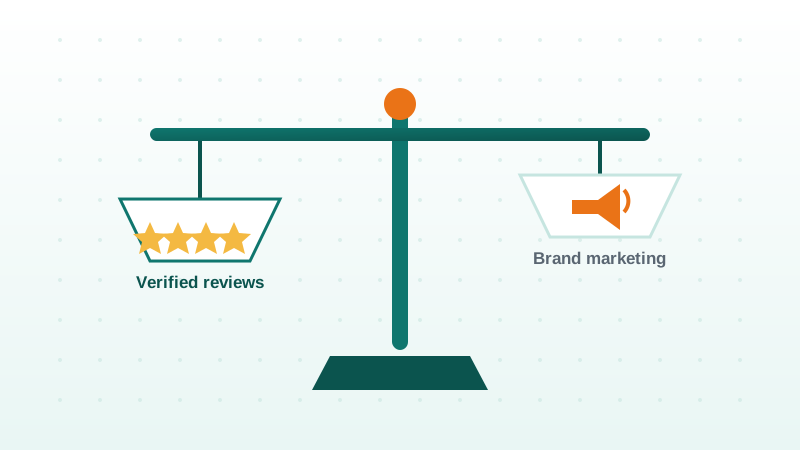
This category has a research problem. Search for any GLP-1 program and you will find affiliate pages, paid press releases reprinted as news, and “reviews” written by competitors. We built The Weight Verdict to do the boring version instead: read the Trustpilot distribution, pull the BBB record, check the price on the company’s own checkout, and cite the FDA document by name.
Start here
Compare all four programs side by side →
Individual reviews
| Program | Our score | Best for | Read |
|---|---|---|---|
| RemedyMeds | 4.4 / 5 | Most included in the price — labs, cold-chain shipping, seven-day support | RemedyMeds review → |
| Direct Meds | 4.5 / 5 | The largest verified customer-review base, and the fastest published turnaround | Direct Meds review → |
| TrimRx | 4.1 / 5 | Cash payers who want supplies included in the box | TrimRx review → |
| MEDVi | 4.0 / 5 | Oral-tablet option and a branded-medication tier, with a record worth reading first | MEDVi review → |
What we check, on every program
Evidence we use
- Trustpilot rating and star distribution — an average of 3.5 can mean “fine” or it can mean half the customers are furious.
- The company’s response rate to negative reviews.
- BBB accreditation status, letter grade, complaint counts and customer review average.
- Prices read off the provider’s own live pages, with the date we checked.
- Refund and cancellation terms as actually published.
- Named FDA documents, quoted and dated.
Evidence we refuse
- Vendor-supplied member counts and star ratings in affiliate materials.
- Paid press releases republished as independent news.
- Countdown timers and spots-remaining counters.
- “Reviews” written by a direct competitor of the company being reviewed.
- Aggregator sites with no named authorship or sourcing.
- Anything we cannot trace back to a source we can name on the page.
Before you sign up for anything
Three things are true of every program in this category, and knowing them will save you more money than any discount code:
The advertised price is almost never the ongoing price. Intro-to-renewal price shock is the single most common complaint across every company we have reviewed. Find the month-two number before you enter a card.
Compounded is not the same as branded. Compounded semaglutide and tirzepatide are not FDA-approved, and the FDA has not reviewed them for safety, effectiveness or quality. If your insurance covers branded medication, that is almost always the better route on both cost and regulatory footing.
The rules are actively changing. The FDA proposed removing semaglutide, tirzepatide and liraglutide from the 503B Bulks List on 30 April 2026, and has issued three waves of warning letters to telehealth marketers in this category since September 2025. Be careful about long prepaid commitments.